
Your Car Won't Start: How Vehicle Tracking Systems Can Brick Modern Vehicles

You slide into the driver’s seat, press the start button, and… nothing. No dashboard lights. No engine crank. Your luxury car has become an expensive paperweight. Not because of a mechanical failure or dead battery—but because its factory-installed tracking system lost contact with a satellite or server and decided the vehicle was being stolen.
This exact scenario played out across Russia in late November 2025, when hundreds of Porsche owners woke up to immobilized cars. The culprit? Porsche’s Vehicle Tracking System (VTS), a satellite-linked anti-theft module standard on models built since 2013. When the VTS lost connectivity, it triggered the engine immobilizer, cutting fuel delivery and preventing the cars from starting. Dealerships reported a surge in identical complaints from Moscow to Krasnodar. Owners described vehicles that had been running fine suddenly refusing to respond.
Russia’s largest Porsche dealer group, Rolf, confirmed the issue stemmed from the factory VTS module losing satellite communication. The system is designed to alert owners to unauthorized movement and, in some configurations, remotely immobilize the vehicle. In this case, the loss of signal was interpreted as a theft attempt, automatically activating the anti-theft protocol. Porsche models including Cayennes, Panameras, Macans, and 911s—all equipped with the VTS—were affected regardless of engine type.
How Vehicle Tracking Systems Work—and Fail
Modern connected cars rely on telematics units like Porsche’s VTS for anti-theft protection, location tracking, roadside assistance, and remote services. These systems constantly ping satellites or cellular networks. If the connection drops, many are programmed to assume tampering and lock down the engine as a security measure. While this protects against thieves jamming signals, it creates a new vulnerability: a single server outage, satellite glitch, or regional connectivity issue can brick hundreds of vehicles at once.
In the Russia case, owners reported mixed success with workarounds. Some disabled or rebooted the VTS module directly. Others disconnected their car batteries for up to 10 hours to reset the system. A few had to tow their vehicles to dealerships. Porsche itself did not issue an immediate public statement on the root cause, though reports speculated everything from a routine server-side failure to possible deliberate satellite interference amid geopolitical tensions. The incident highlighted how dependent even high-end vehicles have become on cloud-connected security features.
Broader Risks Beyond One Outage
The Porsche episode is not isolated. Many automakers equip vehicles with similar connected immobilizers or starter-interrupt devices. In the United States, subprime auto lenders have long used GPS-linked “starter interrupt devices” (SIDs) that can remotely disable a car’s ignition if payments are missed—sometimes with little warning. These systems, installed by dealerships or lenders, have stranded drivers in parking lots, at work, or even on the highway in emergencies.
Fleet-management companies and insurance telematics units also incorporate remote-disable capabilities. A software bug, expired subscription, or manufacturer-side server maintenance can turn your daily driver into a stationary object. Cybersecurity researchers have repeatedly warned that these always-on connections create attack surfaces: hackers could theoretically spoof a signal loss or issue false immobilization commands.
The financial and safety implications are significant. Imagine being unable to start your car during a family emergency, a work commute in extreme weather, or while stranded far from home. Owners in Russia described the frustration of suddenly owning six-figure vehicles that refused to move. For many, the only immediate fix required technical knowledge or a dealership visit—options not always available in rural areas or during off-hours.
What Owners Should Know
Most drivers never read the fine print on their vehicle’s connected services. When you activate factory tracking, remote start, or over-the-air updates, you’re often agreeing to systems that can override the ignition without physical access. Some models allow you to disable these features through the infotainment menu or a service center, but doing so may void anti-theft warranties or disable safety alerts.
Experts recommend:
Checking your owner’s manual or app settings for any “vehicle tracking,” “telematics,” or “immobilizer” options.
Documenting how to safely disable the module if needed (consult a trusted mechanic—DIY battery resets carry risks).
Considering non-connected vehicles for critical daily use if privacy or reliability is a priority.
Until automakers prioritize offline fallback modes and clearer consent for remote-control features, glitches like the Porsche Russia outage serve as a stark reminder: the same technology marketed for safety and convenience can leave you stranded when the servers go silent.
Your car is smarter than ever—but that intelligence now depends on networks far beyond your garage. One lost signal, one server hiccup, and what was supposed to protect your vehicle can instead lock you out of it. In an era of connected everything, the ability to drive home may no longer be something you can take for granted.
All Access Pass
Know what you're buying before you sign
Full annoyance reports for every vehicle — subscription traps, privacy issues, forced nags, and the stuff dealers won't mention.
- Detailed reports for all vehicles in our database
- Side-by-side comparisons across up to 4 vehicles
- Premium articles and analysis
- No auto-renewal — one payment, 3 months of access
Related Articles
Your Next Car Is a Computer. Washington Just Decided Whose Computer Counts.
If you have shopped for a new car in the last year, you have already met the issue, even if nobody used the words “Connected Vehicle Rule.” The salesman talked about the app that starts the car from the grocery lot, the subscription that keeps the maps fresh, the hands-free highway system that wants a camera on your eyes. All of that travels over a modem. That modem is why Polestar is leaving the U.S. market after the 2026 model year, why Volvo got a pass from the same parent company, and why Ford and GM are in a quieter fight with their own customers over insurance data.
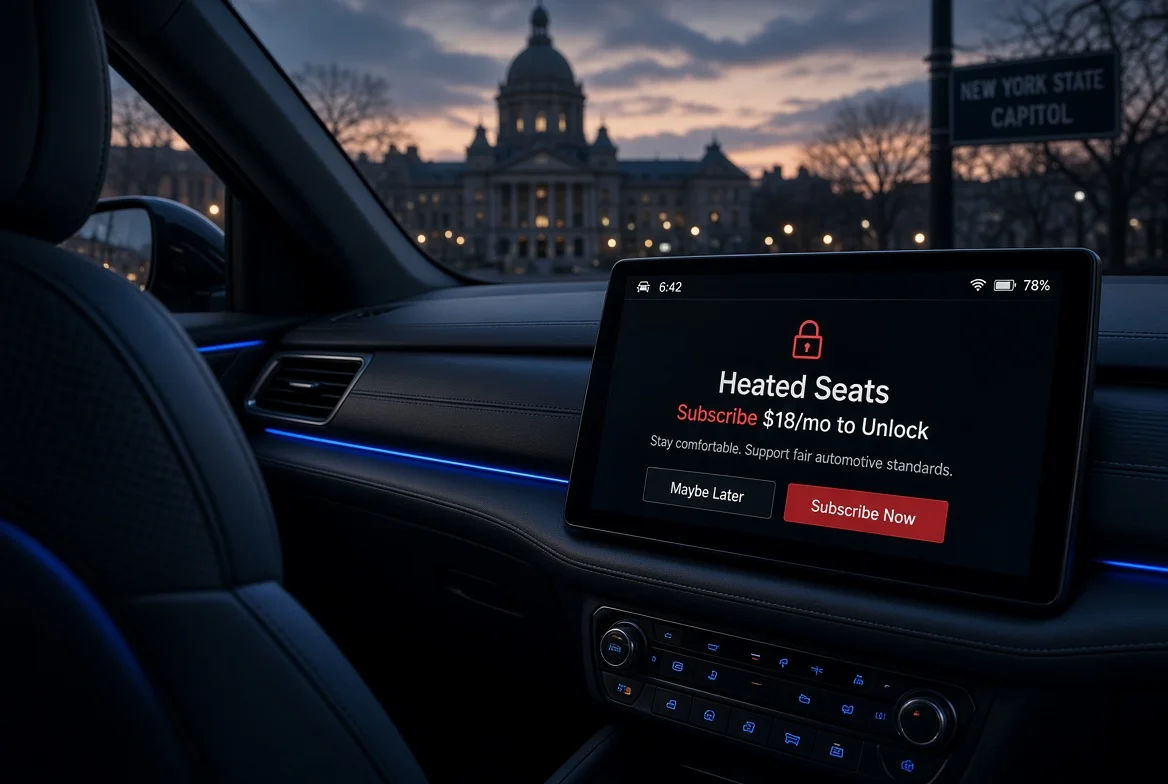
Is Help on the Way for Car Feature Subscriptions?
Last year, New York came closer than any other state to drawing a hard line against one of the most straightforward post-purchase annoyances in modern cars: charging recurring fees for hardware already installed at the factory.
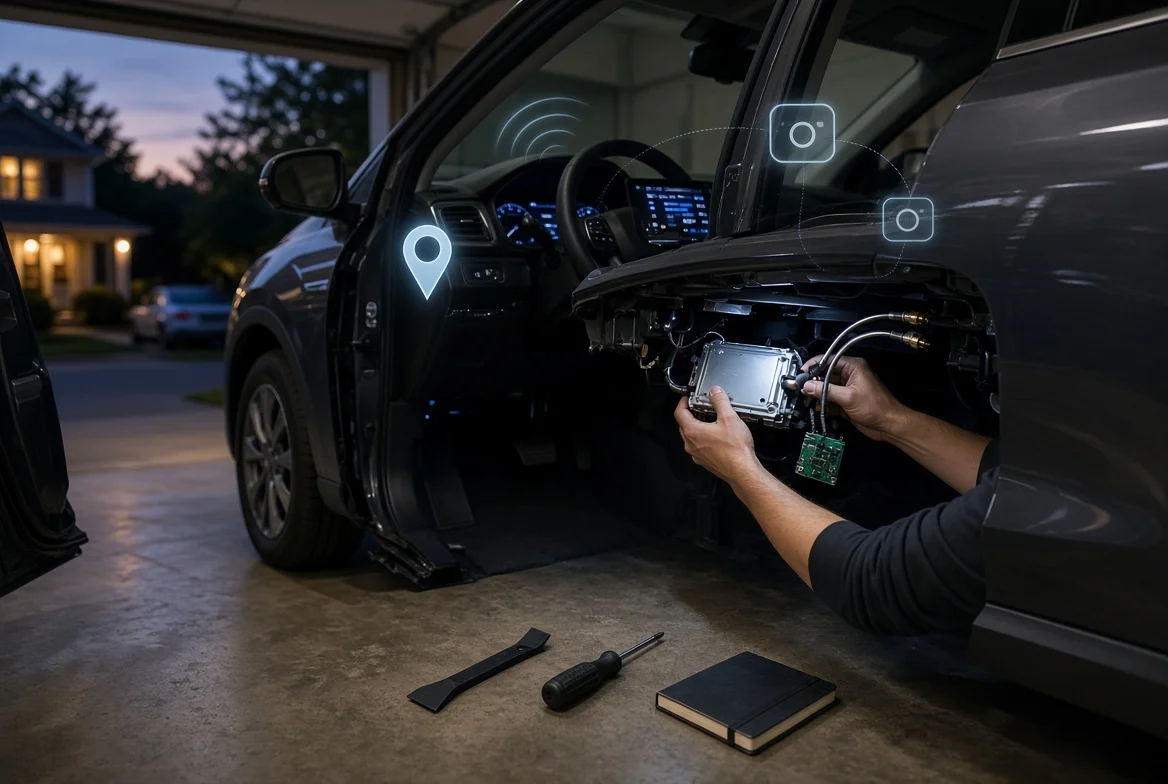
If You Care About Privacy and Subscriptions, Prepare to Get Under the Dash
Modern cars come loaded with features that used to be free or optional and are now locked behind monthly fees, always-on data collection, and systems that can’t easily be turned off. Location tracking, driving-behavior data, cabin cameras, and microphones are common. Heated seats, remote start, advanced driver-assistance functions, and even basic navigation can require ongoing subscriptions.