
Is Help on the Way for Car Feature Subscriptions?
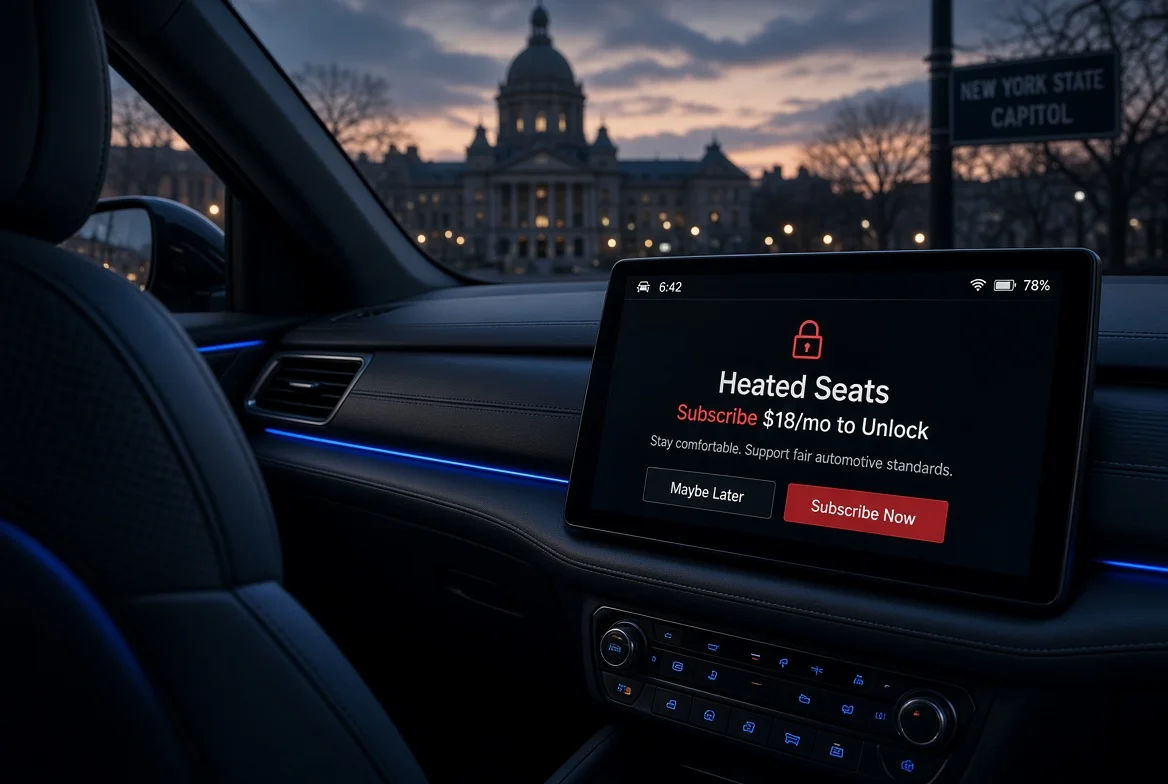
Last year, New York came closer than any other state to drawing a hard line against one of the most straightforward post-purchase annoyances in modern cars: charging recurring fees for hardware already installed at the factory. Senate Bill S5708 (and its Assembly companion) passed both chambers with overwhelming support. It would have made it illegal for manufacturers and dealers to sell subscription services for features that use pre-installed components and that work without ongoing cost or third-party support. Classic examples include heated seats and certain convenience functions. The bill left room for true connectivity services—navigation updates, Wi-Fi, telematics, satellite radio, and software-dependent driver-assistance systems that rely on data networks. Violations would have carried a modest civil penalty of up to $250 per point of sale.
Governor Kathy Hochul vetoed it in December 2025. In her veto message she said she supports strong consumer protections but argued the bill “limits consumer choices and may increase the costs of new vehicles.”
That was not the end of the story in Albany.
New York Tries Again
In early 2026, the same idea returned as Senate Bill S9348 (later S9348A) and Assembly Bill A10411A, again sponsored by Sen. James Skoufis and Assemblymember William Magnarelli. The language is essentially the same prohibition on post-sale subscriptions for installed hardware that functions without ongoing support, with the same carve-outs and the same $250 penalty.
This time the bill moved faster. The Assembly passed A10411A on May 19, 2026. The Senate substituted it for its own version and passed it on June 4, 2026. As of mid-August 2026, the measure has cleared both houses and is awaiting delivery to the governor—or is already on her desk.
Whether Hochul signs it, vetoes it again, or lets it sit remains the central open question. A second veto would signal that the political obstacles are deeper than a one-time disagreement. A signature would give New York the first clear statutory ban of its kind and create a model other states could copy.
Other States: Mostly Still Waiting
New Jersey has kept nearly identical language alive for several sessions. The current version, S568, was introduced in January 2026 and referred to the Senate Commerce Committee. It tracks the New York approach—no subscriptions for pre-installed hardware that works without ongoing expense—and carries significantly higher penalties under the state’s consumer fraud statute (up to $10,000 for a first offense and $20,000 thereafter). It has not advanced beyond committee.
Massachusetts saw a similar bill (S259) introduced in 2025. It received a hearing but was ultimately accompanied by a study order in December 2025, effectively parking it.
Hawaii also floated comparable language in 2026. None of these efforts has yet produced an enacted law.
The pattern is consistent: legislatures in multiple states recognize the problem and can pass bills with bipartisan support. Turning those bills into lasting rules has proven harder. Industry arguments about consumer choice, vehicle pricing, and the need for flexibility on connected services continue to carry weight at the executive level.
What This Means Right Now
Help is closer in New York than anywhere else, but it is not yet here. The 2026 bill’s passage through both houses shows sustained legislative interest and improves the odds compared with 2025. A gubernatorial signature would give consumers a concrete protection and set a precedent. Another veto would leave the status quo intact and force advocates to decide whether to try a third time or shift strategy.
Until a law is on the books, the practical advice remains the same: treat every modern vehicle as potentially subject to post-sale feature fees, demand a clear written list of what requires a subscription before you sign, and factor those costs into the real price of ownership. Public pressure and the threat of more state action have already forced some manufacturers to retreat from the most tone-deaf experiments. Sustained scrutiny and legislative persistence remain the best available levers.
New York’s second attempt is the clearest signal yet that lawmakers are not finished with this issue. Whether that signal turns into enforceable protection depends on what happens on the governor’s desk in the coming weeks and months.
All Access Pass
Know what you're buying before you sign
Full annoyance reports for every vehicle — subscription traps, privacy issues, forced nags, and the stuff dealers won't mention.
- Detailed reports for all vehicles in our database
- Side-by-side comparisons across up to 4 vehicles
- Premium articles and analysis
- No auto-renewal — one payment, 3 months of access
Related Articles
Your Next Car Is a Computer. Washington Just Decided Whose Computer Counts.
If you have shopped for a new car in the last year, you have already met the issue, even if nobody used the words “Connected Vehicle Rule.” The salesman talked about the app that starts the car from the grocery lot, the subscription that keeps the maps fresh, the hands-free highway system that wants a camera on your eyes. All of that travels over a modem. That modem is why Polestar is leaving the U.S. market after the 2026 model year, why Volvo got a pass from the same parent company, and why Ford and GM are in a quieter fight with their own customers over insurance data.
If You Care About Privacy and Subscriptions, Prepare to Get Under the Dash
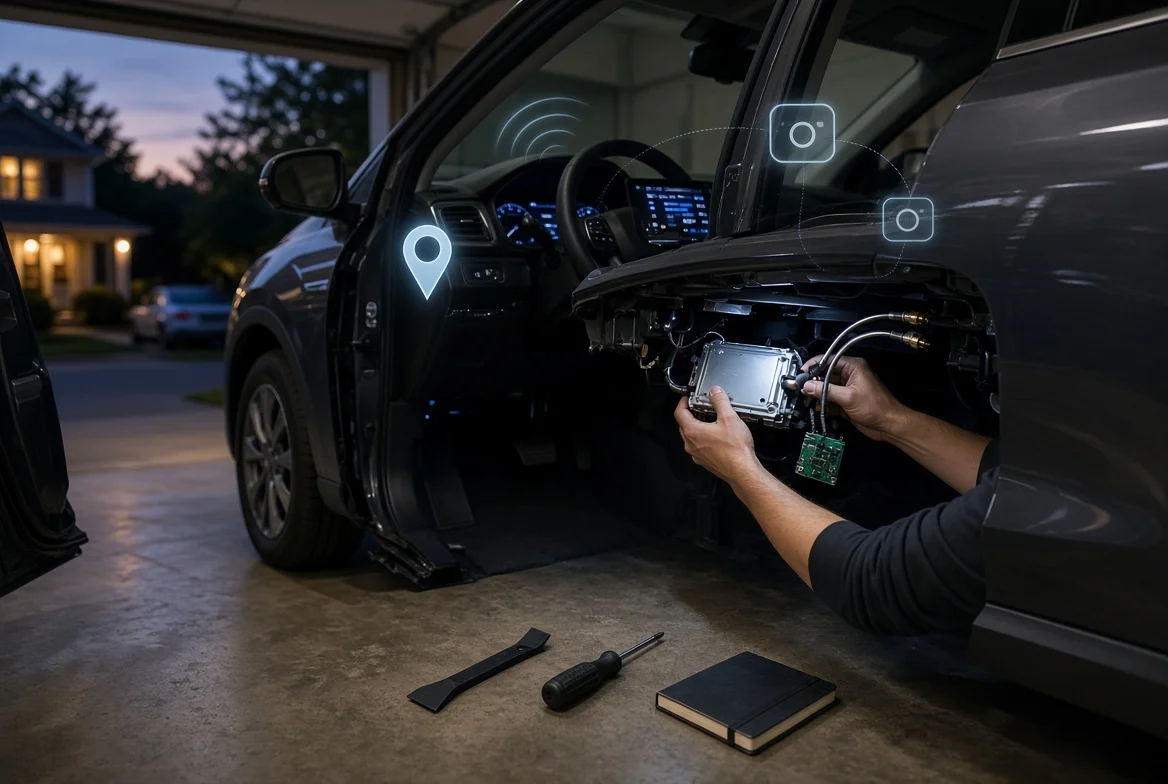
Modern cars come loaded with features that used to be free or optional and are now locked behind monthly fees, always-on data collection, and systems that can’t easily be turned off. Location tracking, driving-behavior data, cabin cameras, and microphones are common. Heated seats, remote start, advanced driver-assistance functions, and even basic navigation can require ongoing subscriptions.
Can You Really Stop Your Ford From Tracking You?
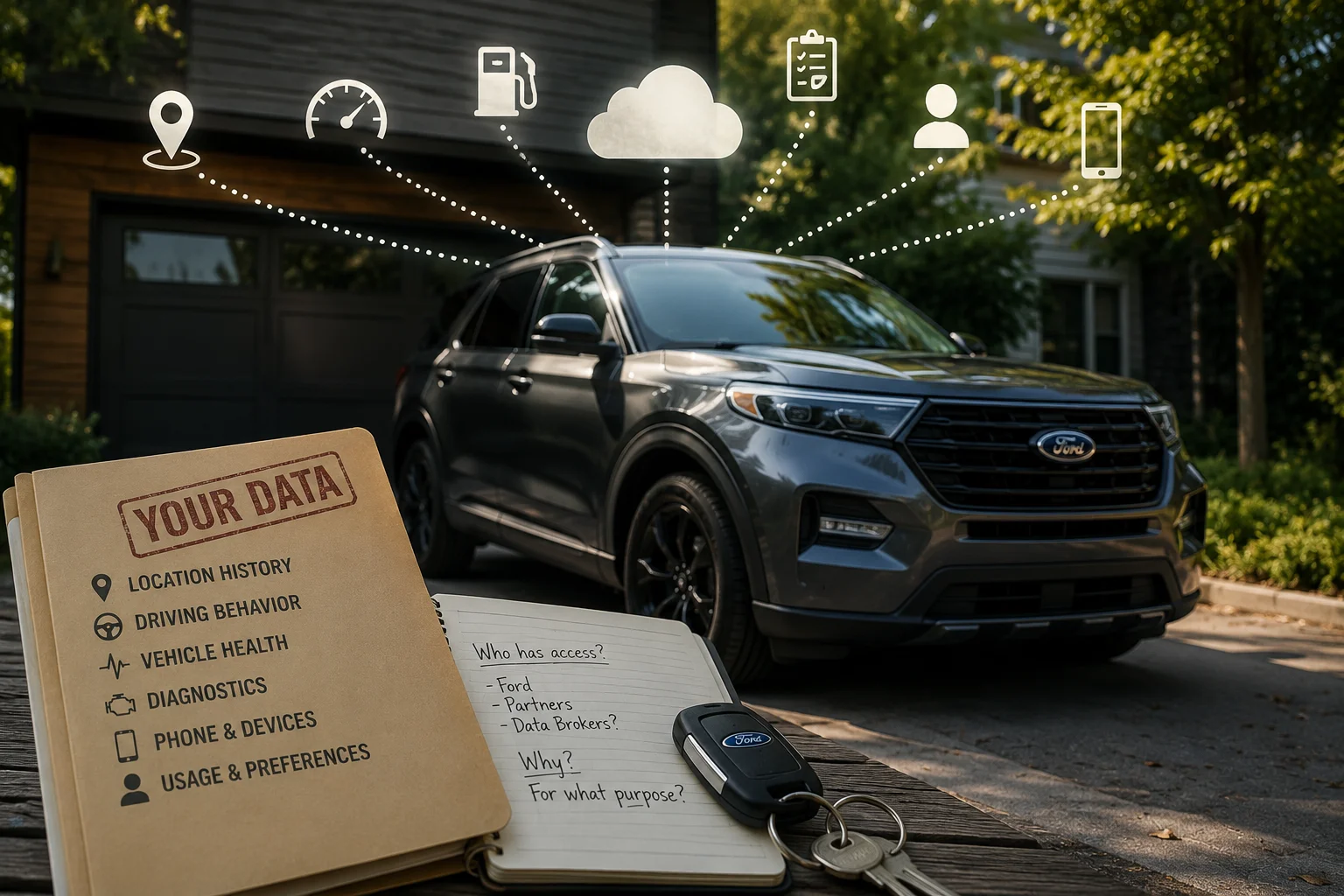
Modern Fords are computers on wheels. They know where you've been, how you've driven, when you brake hard, what warnings have appeared on the dashboard and, if you use connected services, information about your phone and how you interact with the vehicle.